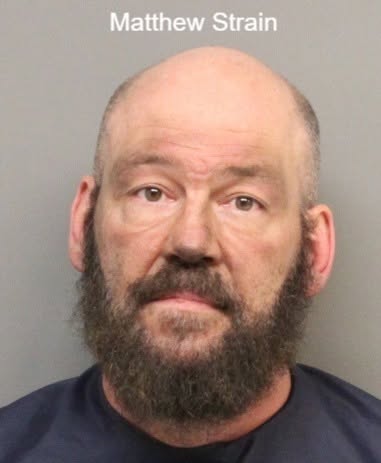
Matthew Strain 55 Death Obituary Omaha NE-Whenever a life is lost in a violent confrontation with law enforcement, the ripples are felt far beyond the immediate neighborhood. The recent death of Matthew Strain, 55, in South Omaha, Nebraska, has left a community searching for answers, a police department under intense scrutiny, and a family grappling with a sudden, devastating loss. This isn’t just another headline about an officer-involved shooting; it is a complex, heartbreaking story that sits right at the intersection of a worsening housing crisis, mental health struggles, and the heavy, split-second decisions required of modern police forces.
If you have been searching for information regarding the Matthew Strain, 55, death, obituary Omaha, NE, or the investigation ongoing following the fatal officer-involved shooting, you have likely found scattered news reports. Most of these reports offer nothing more than brief summaries. They give you the time of the 911 call and the official statements from the police precinct. But to truly understand what happened on that fateful Tuesday on 19th Street, we have to look much deeper. We have to unpack the exact timeline of the standoff. We need to examine the psychological toll of evictions. We have to look closely at the tactical decisions made by the Omaha Police Department’s SWAT team, and we need to have a serious, grown-up conversation about the legal philosophy that dictates when and how police officers use lethal force.
Grab a cup of coffee and settle in. We are going to explore every single angle of this tragic event. By the time you finish reading, you will have a comprehensive understanding not just of how Matthew Strain died, but of the broader societal failures and legal frameworks that made this violent confrontation almost inevitable.
The Tragic Timeline: Unpacking the Events of June 3, 2026
To comprehend the sheer gravity of this situation, you have to put yourself in the shoes of both the residents of that home and the responding officers. The events of June 3, 2026, did not escalate in a vacuum. They were the result of hours of tension, failed communications, and a terrifying standoff that paralyzed a quiet South Omaha neighborhood. Let’s break down the timeline step by step.
The Morning Dispute and the 911 Call The morning started like any other Tuesday, but trouble was already brewing at a residence near Armbrust Acres on 19th Street. At approximately 8:45 a.m., the Omaha Police Department received a 911 call regarding a landlord-tenant disturbance. This wasn’t a random break-in or a street altercation; it was a deeply personal, highly stressful conflict tied to a looming eviction deadline. According to reports, 55-year-old Matthew Strain was refusing to leave his rented room. Evictions are notoriously volatile situations. When a person feels cornered, knowing they are about to lose the roof over their head, panic sets in. Responding officers arrived on the scene expecting a standard civil standby—a routine procedure where police simply ensure the peace is kept while a tenant vacates the premises. But this was far from routine.
The Escalation and the Threat Upon arrival, officers quickly realized they were dealing with a highly dangerous situation. Strain had barricaded himself inside his room. But it wasn’t just a locked door that gave the officers pause; it was what Strain was saying. He reportedly warned the officers, “If anyone comes into this room, someone will die today.”
Let those words sink in for a moment. For a patrol officer standing in a narrow hallway, that sentence changes the entire rulebook. The situation instantly morphed from a civil dispute into an armed barricade scenario. Strain claimed to have a stockpile of weapons and thousands of rounds of ammunition. To make matters worse, officers outside the door could literally hear the chilling, metallic sounds of a firearm being handled and a magazine being loaded. At this point, the patrol officers smartly backed away, set up a secure perimeter, and called in the specialized units. Efforts to de-escalate the situation began. Negotiators attempted to talk Strain down, hoping to find a peaceful resolution to an incredibly tense morning. But as the hours ticked by, those efforts proved completely unsuccessful.
The Deployment of SWAT and “The Rook” By 4:00 p.m., the standoff had stretched out for over seven hours. The neighborhood was locked down. Neighbors were terrified, peeking through their blinds as heavily armed tactical officers swarmed their street. The Omaha Police Department decided they could no longer wait. They brought in a specialized piece of tactical equipment known as “The Rook.” This is a heavily armored, tracked vehicle designed to protect officers while breaching structures.
As The Rook approached the residence to secure the area and potentially clear a path, the situation reached its fatal climax. Police say Strain, armed with an AR-15-style rifle equipped with a high-capacity drum magazine, opened fire from an upstairs window directly at the armored vehicle.
When a suspect opens fire on law enforcement with a high-powered rifle, the response is immediate and overwhelming. Four members of the SWAT team returned fire. In a fascinating tactical split, two of these officers used less-lethal chemical munitions (likely tear gas or pepper balls to force him out), while the other two officers fired lethal rounds. Following the exchange of gunfire, police used a drone to safely look into the window. The drone footage confirmed that the suspect had been incapacitated. When officers finally entered the room, they found Matthew Strain on the floor, still holding the rifle. Omaha Fire Department medics pronounced him dead at the scene from a single gunshot wound to the head.
Who Was Matthew Strain? The Intersection of Evictions and Despair
When searching for a Matthew Strain obituary in Omaha, you are likely to find very few personal details initially. In the immediate aftermath of an officer-involved shooting, the deceased is often reduced to the label of “the suspect.” But Matthew Strain was a 55-year-old human being with a history, a family, and a life that ultimately spiraled into absolute tragedy.
Who is the man behind the police barricade? Strain was a 55-year-old white male living in South Omaha. While the police reports highlight the fact that he was a convicted felon prohibited from possessing firearms, we have to ask ourselves what leads a man in his mid-fifties to decide that dying in a shootout with a SWAT team is preferable to leaving his apartment.
This brings us to the agonizing reality of evictions. Psychologists and sociologists will tell you that the stress of losing your home is second only to the death of a loved one. When you are 55 years old, the prospect of starting over on the streets is terrifying. You don’t have the resilience of a twenty-something. For many individuals in this demographic, an eviction notice feels like a death sentence. It strips away dignity, security, and hope.
It is highly likely that Matthew Strain was dealing with severe mental health struggles or an overwhelming sense of despair. People who are thinking rationally do not fire AR-15s at armored police vehicles. The claim that he had a “stockpile of weapons” and his fatalistic warning to police suggest a man who had already made up his mind that his life was at its end. He was treating his eviction not as a legal process, but as a final stand. Recognizing this does not excuse his incredibly dangerous and violent actions—firing at public servants is an intolerable threat to the community. However, recognizing his despair helps us understand the “why” behind the “what.” It paints a picture of a man who felt he had absolutely nothing left to lose.
Tactical Breakdown: The Role of Armored Vehicles and Less-Lethal Munitions
To really grasp how the events of June 3 unfolded, we need to take a deep dive into the tactical equipment and strategies used by the Omaha Police Department. Modern policing, especially in high-risk SWAT callouts, relies heavily on advanced technology to keep both the officers and the public safe.
Understanding “The Rook” in Modern Policing You might have read that police deployed a vehicle called “The Rook.” But what exactly is that? The Rook is essentially a modified Bobcat tracked skid-steer loader, but instead of moving dirt on a construction site, it is outfitted with custom-built, NIJ Level IV bulletproof glass and heavy armor plating. It is a formidable piece of machinery.
The Rook features different attachments. It can use a hydraulic breaching ram to knock down reinforced doors. It can use a vehicle extraction tool to move cars out of the way. Most importantly for this standoff, it has an armored deployment platform that allows tactical officers to be raised up to a second-story window while remaining completely protected behind steel and ballistic glass.
When Omaha Police brought The Rook to 19th Street, their goal was likely to safely breach the window or deliver chemical agents into Strain’s room without exposing an officer on foot to rifle fire. It is an intimidation tool as much as a tactical one. The sheer size and noise of The Rook rolling up to a house are meant to signal to a barricaded suspect that the standoff is over and resistance is futile. Tragically, in Strain’s case, the appearance of the vehicle triggered a violent escalation rather than a surrender.
Chemical Munitions vs. Lethal Force: A Split Second Decision One of the most remarkable details released by the Omaha Police Department is the way the four SWAT officers reacted when Strain opened fire. Two officers returned fire with lethal weapons (their service rifles), while two others fired less-lethal chemical munitions.
This split reaction offers an incredible window into the chaos of a firefight. In a fraction of a second, as bullets from a high-capacity drum magazine struck their armored vehicle, the officers had to process the threat, aim, and engage. The fact that two officers chose to deploy tear gas or chemical rounds while actively being shot at shows a profound commitment to using the minimal force necessary, even in a deadly scenario. The officers using lethal rounds were doing exactly what they were trained to do: neutralize an active, deadly threat to prevent the loss of innocent life. It is a chaotic, terrifying symphony of split-second decisions that most of us will thankfully never have to make.
The Investigation: Transparency, Body Cameras, and the Legal Aftermath
Whenever a police officer takes a life, a massive administrative and legal machine kicks into gear. The phrase “Investigation Ongoing” is not just PR spin; it represents a rigorous, multi-agency process designed to ensure absolute accountability.
In the case of Matthew Strain, the Omaha Police Department is not investigating itself entirely. Bellevue Police and the Sarpy County Sheriff’s Office have been called in to assist with the investigation. This multi-agency approach is crucial for maintaining public trust. It prevents accusations of a cover-up and ensures that an objective set of eyes is looking at the evidence.
A massive part of this investigation will revolve around video evidence. OPD has confirmed that portions of the standoff and the shooting were captured on body-worn cameras and the tactical drone deployed by SWAT. This footage is the gold standard of evidence. It will show exactly what warnings were given, how Strain initiated the gunfire, and how the officers responded.
Forensic teams are currently cataloging the scene. They will count every spent shell casing. They will analyze the trajectory of the bullets that struck The Rook. They will document the “thousands of rounds of ammunition” found in Strain’s room. Every single piece of evidence will be compiled into a massive report that will eventually be handed over to a grand jury or a district attorney to determine if the use of lethal force was legally justified. Given the fact that Strain fired an AR-15 at police first, legal experts widely expect the shooting to be ruled completely justified, but the process must still be followed to the letter of the law.
The Omaha Police Department: Officer Profiles and Administrative Leave
Following the fatal encounter, the Omaha Police Department publicly identified the officers involved. This is a standard transparency measure, though it places an immense emotional burden on the officers and their families.
Among the five officers identified, Sergeant Sergio Gutierrez stands out with 14 years of service, alongside Officer Trevor Shoemaker, who has served for eight years. These are not rookies. These are seasoned veterans of the force who have likely responded to hundreds, if not thousands, of high-stress calls during their careers.
As per standard operating procedure in every major police department in the United States, all officers who discharged their weapons have been placed on paid administrative leave. To the general public, paid leave sometimes sounds like a vacation. It is anything but. Administrative leave is a mandatory cooling-off period. It ensures that officers who have just gone through a highly traumatic event are taken off the streets so they can undergo psychological evaluations and debriefings. Taking a human life, even when completely justified and necessary to save your own, leaves a permanent psychological scar. The administrative leave protects the public, the integrity of the investigation, and the mental health of the officers involved.
The Legal Philosophy of Police Shootings and the Use of Force Continuum
To truly comprehend the death of Matthew Strain, we have to step out of Omaha for a moment and look at the broader legal philosophy that governs how police officers use force in America. Why do police shoot? When are they allowed to shoot?
The entire framework of police use of force is built upon a landmark 1989 Supreme Court case called Graham v. Connor. In this ruling, the Supreme Court established the standard of “objective reasonableness.” What this means in plain English is that an officer’s actions must be judged from the perspective of a reasonable officer on the scene, rather than with the 20/20 vision of hindsight.
The court recognized that police officers are forced to make split-second judgments in circumstances that are tense, uncertain, and rapidly evolving. When Matthew Strain pointed a rifle out the window and squeezed the trigger, the officers did not have the luxury of calling a timeout to debate his mental state or his eviction troubles. They had milliseconds to react to a lethal threat.
Police are trained on what is known as the “Use of Force Continuum.” It starts with mere physical presence. Then it moves to verbal commands (“Come out with your hands up!”). When that fails, officers move to soft empty-hand control, then less-lethal methods (tasers, pepper spray, beanbag rounds). Lethal force is the absolute last resort, situated at the very top of the pyramid.
In the Armbrust Acres standoff, we saw the Omaha Police Department exhaust almost every level of this continuum. They started with a simple civil standby. They moved to verbal negotiations. They waited seven hours. They brought in a tactical vehicle to safely deploy chemical agents. It was only when Strain completely bypassed all negotiations and escalated straight to lethal violence by firing a high-powered rifle that the officers met him at the top of the continuum. Legally and philosophically, the officers’ hands were forced. The tragedy of the situation is that Strain dictated the outcome the moment he pulled the trigger.
The Contrast of Justice: High-Profile Cases vs. The Realities of the Street
When we step back and look at the American justice system as a whole, the Matthew Strain case forces us to confront a glaring, deeply uncomfortable disparity in how due process plays out in our society. The speed and severity of justice are often inextricably linked to wealth, status, and power.
Think about it for a second. On one end of the spectrum, you have extremely wealthy, high-profile individuals facing severe legal peril. Let’s look at figures like Harvey Weinstein or Rudy Giuliani. When Harvey Weinstein faced decades behind bars for heinous crimes, his experience with the justice system was insulated by unimaginable wealth. He hired teams of elite defense attorneys who filed endless motions, delayed hearings, fought over evidentiary rules, and dragged the process out for years through a labyrinth of appeals. Even after convictions, the legal maneuvering continues.
Similarly, look at Rudy Giuliani. Facing massive defamation judgments, bankruptcy proceedings, and severe legal scrutiny, Giuliani’s battles are fought in wood-paneled courtrooms over months and years. He can leverage bankruptcy laws to protect assets, hire expensive counsel to file injunctions, and essentially buy time. For the wealthy and well-connected, the American justice system is incredibly slow, methodical, and padded with endless opportunities to argue their case and preserve their rights.
Now, contrast that protracted, heavily-lawyered due process with the reality faced by Matthew Strain. For a 55-year-old man in South Omaha, staring down the barrel of an eviction with no financial safety net and severe mental distress, the justice system did not arrive in a courtroom with men in expensive suits. It arrived at his bedroom door with a badge, a gun, and an unyielding deadline.
When Strain barricaded himself in that room, the timeline for his “due process” shrank from years down to a matter of hours. By 4:00 p.m., his court of law was a shattered window, and the final verdict was delivered by a SWAT sniper’s bullet.
This comparison is not meant to justify Strain’s violent actions. Firing a drum-magazine AR-15 at police officers is a terrifying, lethal threat that demands an immediate and decisive tactical response to protect the public. Law enforcement did what they absolutely had to do. But from a sociological and philosophical standpoint, the contrast is jarring. It forces us to ask tough questions about how poverty, mental health, and social class dictate the very nature of our legal outcomes. The wealthy fight their battles with paperwork over a decade; the poor often fight theirs in a desperate, violent flash that ends in an obituary.
The Arsenal: Firearms, Felons, and the Threat to Public Safety
One of the most alarming details to emerge from the ongoing investigation into the South Omaha shooting is the sheer volume of weaponry Matthew Strain possessed. Investigators stated that they found multiple firearms and “thousands of rounds of ammunition” inside his room. What makes this detail even more chilling is the fact that Strain was a convicted felon. Under federal and state law, he was strictly prohibited from purchasing, owning, or possessing any firearms.
So, how does a convicted felon amass an arsenal that includes an AR-15 style rifle equipped with a high-capacity drum magazine? This question gets right to the heart of the ongoing debate about gun control, the black market, and public safety in America.
When felons are barred from buying guns at legitimate sporting goods stores, they turn to alternative avenues. Sometimes these weapons are stolen from law-abiding citizens. Other times, they are acquired through “straw purchases,” where a person with a clean background check buys the gun legally and then illegally hands it over to the prohibited person. We are also seeing a massive rise in the use of “ghost guns”—untraceable firearms assembled from kits bought online that require no background check whatsoever.
The fact that Strain was sitting on thousands of rounds of ammunition indicates that this wasn’t a crime of sudden passion. He had been hoarding these materials. He had been preparing for a war. For the neighbors in Armbrust Acres, the realization that an individual capable of such immense destruction was living right next door is deeply unsettling. It highlights a massive loophole in our societal safety net: declaring someone a prohibited possessor on paper does very little to stop them from acquiring weapons in reality.
The Socio-Economic Reality of Evictions in Nebraska
We cannot discuss the death of Matthew Strain without discussing the economic environment that served as the catalyst for this tragedy. Across the United States, and specifically in the Omaha metro area, housing affordability has reached a crisis point. Inflation has driven up the cost of groceries, utilities, and everyday essentials, while wages have largely remained stagnant. At the same time, rent prices have skyrocketed.
For older Americans living on fixed incomes or those struggling to find consistent work, the margin for error is absolutely zero. A single unexpected medical bill, a car repair, or a brief lapse in employment can trigger a downward spiral that ends with an eviction notice taped to the front door.
The legal process of eviction in Nebraska is swift. Once a landlord files a complaint for restitution of the premises, the tenant has very little time to respond or vacate. If the court rules in favor of the landlord, law enforcement is eventually called in to execute the writ of restitution. The police are simply the messengers of the court, tasked with an incredibly unenviable job.
When you mix this rapid, unforgiving economic reality with a lack of robust mental health resources, you create a powder keg. People facing eviction often feel profound shame, anger, and a complete loss of control. In Strain’s case, that powder keg exploded. If we want to reduce the number of violent encounters between citizens and police, we have to start by addressing the root causes of extreme poverty and housing insecurity. Providing emergency rental assistance, mandatory mediation, and immediate mental health interventions during the eviction process could be the difference between a peaceful transition and a fatal shootout.
Community Impact: How South Omaha is Navigating the Trauma
The aftermath of an officer-involved shooting leaves a profound mark on the community. South Omaha is a proud, tight-knit area. The events of June 3 have left residents shaken. For the neighbors on 19th Street, the trauma of hearing a protracted gun battle just yards from their living rooms will not fade quickly. Children were kept home; streets were blocked off with yellow tape; the flashing lights of police cruisers painted the neighborhood in an eerie, terrifying glow.
There is also a broader sense of unease regarding the frequency of these events. This marks the second fatal law enforcement shooting in five days and the fourth in just two months across the Omaha metro area. When police use of lethal force spikes, community leaders and citizens naturally ask why. Is crime becoming more violent? Are mental health crises escalating? Are police tactics shifting?
Police Chief Todd Schmaderer has acknowledged the incredibly tough days the department and the city have faced. The emotional toll on the police force cannot be overstated. Officers do not clock into their shifts wanting to take a life. The cumulative trauma of responding to domestic incidents, murders, and armed standoffs wears heavily on the men and women in uniform. To heal, the community of South Omaha will need transparency, open dialogue, and a concerted effort from local government to address the underlying issues that are driving citizens to such desperate, violent extremes.
Frequently Asked Questions (FAQ) About the Matthew Strain Case
Given the immense public interest in this case, a number of questions keep surfacing in community forums and online searches. Here are the answers to the most frequently asked questions regarding the Matthew Strain death and ongoing investigation.
Why was the Omaha Police Department called to the residence in the first place? Officers were initially dispatched around 8:45 a.m. for a civil standby related to a landlord-tenant disturbance. Matthew Strain was facing an eviction deadline and refused to leave his rented room.
What kind of weapon did Matthew Strain use? Police report that Strain was armed with an AR-15 style rifle. Notably, the weapon was equipped with a large-capacity drum magazine, which allows the shooter to fire a massive amount of ammunition without needing to reload.
What is “The Rook” that the SWAT team used? The Rook is an armored tactical vehicle, built on the chassis of a Bobcat tracked loader. It features heavy armor plating, bulletproof glass, and a hydraulic lift platform. SWAT uses it to safely approach barricaded suspects, breach structures, and protect officers from heavy gunfire.
How did Matthew Strain die? After Strain opened fire on The Rook with his rifle, four SWAT officers returned fire. Later, after a drone was used to safely inspect the room, authorities found Strain dead. The Omaha Fire Department pronounced him deceased at the scene, and it was determined he died from a single gunshot wound to the head.
Was Matthew Strain legally allowed to own the guns? No. Investigators confirmed that Strain was a convicted felon. Under the law, convicted felons are strictly prohibited from possessing firearms or ammunition. It is part of the ongoing investigation to determine how he acquired the weapons and the thousands of rounds of ammo found in his room.
What happens to the police officers who shot him? Following standard protocol for all officer-involved shootings, the five officers identified in the incident, including Sgt. Sergio Gutierrez and Officer Trevor Shoemaker, have been placed on paid administrative leave. This allows for psychological evaluation and ensures the integrity of the external investigation.
Who is handling the investigation? To maintain objectivity and transparency, the Omaha Police Department is not conducting the investigation alone. They are being assisted by the Bellevue Police Department and the Sarpy County Sheriff’s Office. Body camera and drone footage will play a massive role in their findings.
Final Thoughts on the Ongoing Investigation
The search for a “Matthew Strain obituary” will ultimately reveal the tragedy of a life that ended in chaos, violence, and profound despair. The standoff in South Omaha is a stark reminder of the incredible dangers inherent in police work, where a routine eviction standby can instantly transform into a fight for survival against a heavily armed suspect.
The Omaha Police Department officers who responded on June 3 faced a nightmare scenario. They utilized their training, they exercised patience for over seven hours, and when confronted with lethal force, they acted to protect their own lives and the lives of the citizens in Armbrust Acres. The ongoing investigation by the Bellevue Police and the Sarpy County Sheriff’s Office will undoubtedly confirm the grim mechanics of the shootout, analyzing every frame of drone footage and every spent shell casing.
But long after the crime scene tape is taken down and the administrative leave ends, the broader questions will remain. How do we prevent the next Matthew Strain? How do we fix a system where a 55-year-old man feels his only recourse to an eviction is to declare war on the police? How do we stop the flow of high-capacity rifles into the hands of convicted felons?
These are not easy questions to answer. They require us to look past the surface-level news reports and confront the deeply entwined issues of mental health, extreme poverty, housing affordability, and the stark disparities in our justice system. Until we do, the tragic events of June 3, 2026, will serve as a dark, cautionary tale of what happens when society’s safety nets fail completely, leaving nothing but a badge, a gun, and a fatal conclusion.