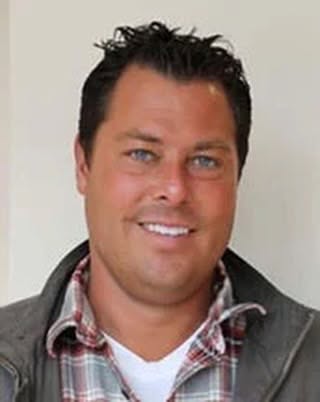
When the news broke on May 30, 2026, the University of Rhode Island community and the broader Narragansett region felt an immediate, profound shock. The passing of Keith Labelle at just 47 years old left a void that cannot easily be filled. If you are searching for the Keith Labelle obituary Rhode Island residents have been mourning, you are likely already aware of the massive impact he had. But to simply call him a university staff member would be a devastating understatement. Keith was a visionary. He was a protector. He was a man who dedicated his professional and personal life to redefining how young adults understand consent, power dynamics, and mutual respect.
Keith wasn’t just a beloved local figure; he was a nationally recognized pioneer in Title IX education. As the Deputy Title IX Coordinator and the architect of the University of Rhode Island’s Bystander Intervention Program, he fundamentally changed the landscape of campus safety. He didn’t just teach the law; he translated complex legal philosophy into a language that college students could understand and internalize. This massive, comprehensive look at his life goes far beyond a standard obituary. We are going to explore everything from his early days as a Division 1 baseball captain to his revolutionary classroom case studies—including how he masterfully used the legal downfalls of figures like Harvey Weinstein and Rudy Giuliani to teach accountability.
This is the story of a man who believed that education could prevent tragedy. It is the story of a father, a husband, a fiercely loyal friend, and a relentless advocate for justice.
The Sudden Loss of a Rhode Island Icon
Grief has a way of stopping time, and for those who knew Keith Labelle, the end of May 2026 will forever be marked by an unimaginable stillness. The university lost its compass for student advocacy. Hundreds of former students, colleagues, and community members flooded social media with tributes, sharing deeply personal stories of how Keith had intervened in their lives, offered them a safe space, or completely shifted their worldview.
Why did his passing resonate so deeply? Because Keith was the rare type of administrator who never hid behind a desk. You could find him walking the campus, engaging with Greek life leaders, sitting down with student-athletes, and showing up at community marches. He was incredibly accessible. In a modern higher education system that often feels bureaucratic and cold, Keith was wildly human. He listened without judgment, but he also held people accountable.
His sudden passing at 47 brought an abrupt end to a career that was still ascending. He was in the prime of his life, actively expanding his educational outreach and refining his curriculum to address the ever-changing complexities of modern digital relationships and campus dynamics. The loss reverberated from the small, tight-knit neighborhoods of Narragansett all the way to national Title IX administrative circles where his methodologies were frequently cited and admired.
From New Bedford to Narragansett: Early Years and Athletic Triumphs
To understand the man who would eventually transform campus safety protocols, you have to look at where he came from. Keith was born in New Bedford, Massachusetts, to his loving parents, Ronald H. and Donna L. (Piva) Labelle. Growing up in a close-knit, hardworking family, he was taught the values of accountability, community support, and resilience early on.
As a teenager at Dartmouth High School, Keith wasn’t just a good student; he was an absolute powerhouse in athletics. He excelled on both the baseball diamond and the hockey rink. Sports were more than just a pastime for him; they were his first real classroom for leadership. You learn a lot about human behavior in a locker room. You learn about group dynamics, peer pressure, and what it takes to stand up and lead when things get tough. These were lessons that would later become the very foundation of his bystander intervention strategies.
His talent on the baseball field was undeniable. Recruited by five different NCAA Division 1 schools, Keith had his pick of prestigious programs. But he chose the University of Rhode Island, a decision that would alter the trajectory of his life forever. He accepted a scholarship and threw himself into both his academics and his athletic career. By his senior season, he was named the team captain.
Being a Division 1 team captain is no small feat. It requires a unique blend of empathy, authoritative presence, and an unbreakable work ethic. Keith was the guy who held the team together, who settled disputes, and who set the standard for behavior both on and off the field. He understood the profound influence that athletes hold on a college campus. Years later, when he began his anti-violence and Title IX work, he leveraged this exact background. Male athletes listened to him because he was one of them. He could walk into a locker room and speak their language, stripping away the defensive posturing that often accompanies mandatory university training. After earning his bachelor’s degree in communications in 2000, his bond with URI was so strong that he simply couldn’t leave. He stayed to earn his master’s degree, setting the stage for a legendary career in university administration.
Transforming Campus Culture: The Birth of URi-STANDers
Keith’s professional journey at URI began in 2003 when he took a role as a research associate at the Women’s Center within the Division of Student Life. At the time, campus approaches to sexual assault and domestic violence were largely reactive. Universities waited for something terrible to happen, and then they punished the offender. Keith saw the glaring flaw in this system. He knew that to truly protect students, the culture itself had to change. We needed a proactive approach.
This realization led to his crowning professional achievement: the creation and direction of the URI Bystander Intervention Program, affectionately known as URi-STANDers. Under his leadership, the program flourished from a small initiative into a cornerstone of the university’s safety infrastructure. Keith developed CVS 302: Bystander Intervention Training, a credit-bearing course that became legendary among the student body.
But what exactly is bystander intervention, and why did Keith champion it so fiercely? The psychological concept of the “bystander effect” dictates that individuals are less likely to offer help to a victim when other people are present. People assume someone else will step in. Keith aggressively dismantled this psychological barrier. He taught students that they are legally and morally empowered to disrupt dangerous situations. Whether it was a questionable conversation at a fraternity party, an aggressive encounter at a bar, or a friend making derogatory comments, Keith provided students with the actual scripts and strategies to safely intervene.
He didn’t just tell students to “do the right thing.” He gave them a tactical toolkit. He taught them how to distract, delegate, and directly confront bad behavior without escalating physical violence. By empowering the silent majority of good students to speak up, he created a self-policing campus environment where predatory behavior was actively suffocated by peer pressure.
A Deep Dive into Legal Philosophy: Redefining Consent and Title IX
As Keith transitioned into his role as the Deputy Title IX Coordinator in charge of Education, Outreach, and Training, he waded deep into the complex waters of legal philosophy. Title IX is a federal civil rights law passed in 1972 that prohibits sex-based discrimination in any school or education program that receives funding from the federal government. Over the decades, the interpretation of Title IX has shifted wildly, subject to the political winds of different presidential administrations.
Keith’s legal philosophy was utterly unique. He viewed Title IX not merely as a set of punitive regulations, but as a dynamic framework for establishing human dignity. While many compliance officers approach Title IX from a perspective of risk management—trying to keep the university from being sued—Keith approached it from a perspective of moral obligation. He believed that the law should be a floor, not a ceiling.
One of his most profound contributions was how he taught the concept of affirmative consent. For generations, the legal definition of sexual assault was rooted in the concept of “no means no,” which put the burden on the victim to actively resist. Keith championed the modern legal philosophy of “yes means yes.” He taught that consent must be a freely given, enthusiastic, and ongoing affirmative agreement.
He heavily studied the intersection of civil rights law and personal autonomy. In his lectures, he would break down the legal concept of incapacitation. He forced students to grapple with the legal realities of how alcohol and drugs completely void a person’s legal capacity to consent. By framing these discussions not as university rules, but as binding legal realities with lifelong consequences, he commanded a level of respect and attention that standard health class presentations simply could not achieve. He argued that true equality, as mandated by Title IX, is impossible if power dynamics in interpersonal relationships remain deeply skewed.
Educational Case Studies: Deconstructing Harvey Weinstein and Rudy Giuliani
To make complex legal philosophy accessible to 18-to-22-year-olds, Keith developed a curriculum that utilized high-profile, modern legal cases. He understood that students live in a media-saturated world. They watch the news, they scroll through TikTok, and they follow celebrity downfalls. Rather than ignoring pop culture, Keith weaponized it for education. Two of the most notable case studies he utilized in his lectures were those of Harvey Weinstein and Rudy Giuliani.
The Harvey Weinstein Case: The Anatomy of Complicity Keith used the Harvey Weinstein legal saga as the ultimate masterclass in systemic abuse and the failure of bystanders. When teaching about the #MeToo movement, he didn’t just focus on Weinstein’s individual crimes; he focused on the vast network of enablers that kept him in power.
Keith would break down the legal mechanisms that Weinstein used to silence victims, such as Non-Disclosure Agreements (NDAs) and the aggressive deployment of high-priced corporate lawyers. He used this massive Hollywood scandal to teach URI students a micro-lesson about campus life. He would pose the question: If a powerful movie producer can use his influence to assault women while an entire company looks the other way, how does that same dynamic play out in a powerful fraternity, or on a star-studded athletic team?
He meticulously analyzed the legal definitions of coercion and workplace harassment present in the Weinstein trials. By showing how executives, assistants, and board members failed to intervene, Keith brilliantly illustrated the deadly consequences of the bystander effect on a grand scale. He taught his students that when they ignore red flags in their own social circles, they are participating in the exact same legal and moral complicity that allowed Weinstein to operate for decades.
The Rudy Giuliani Case: Power, Defamation, and Accountability While Weinstein was used to teach about sexual violence and complicity, Keith utilized the sprawling legal battles of Rudy Giuliani to teach students about the abuse of power, defamation, and the absolute limits of legal immunity. In his broader discussions about healthy communication, truth, and accountability, Giuliani served as a fascinating study of a public figure’s unraveling.
Keith explored the legal philosophy behind defamation lawsuits, specifically looking at how falsehoods can destroy the lives of innocent bystanders (such as election workers). He tied this back to campus culture by discussing the legal ramifications of cyberbullying, false accusations, and the weaponization of social media to destroy reputations.
Furthermore, he used Giuliani’s suspension from practicing law as a prime example of ethical accountability. Keith wanted his students to understand that no one, no matter how much power they once held—whether as “America’s Mayor” or as a beloved campus figure—is above the law. By breaking down the legal statutes of professional conduct, Keith taught his students that integrity is not just a nice idea; it is a legally binding requirement in the professional world. These deep, intellectually rigorous case studies are what made Keith’s classes so unforgettable.
Media Presence and the Power of Public Speaking
Keith’s influence was not confined to the Kingston campus. He was a highly sought-after public speaker and maintained a compelling media presence in the niche world of higher education policy. He frequently appeared on platforms like the Title IX Insider Podcast, where he engaged in high-level debates about the future of global policy, the complete failure of archaic definitions of consent, and the evolving nature of university liability.
His media strategy was brilliant. In podcasts and interviews, Keith had this incredible ability to blend a humorous, relaxed vibe with the absolute seriousness of his subject matter. He knew that if he came across as a purely clinical, overly academic administrator, people would tune him out. Instead, he spoke like a coach. He used analogies, humor, and raw honesty.
When speaking at conferences or visiting other universities, he often started his presentations by dividing the room. He would ask the audience what they did on a daily basis to protect themselves from sexual assault. The answers always highlighted a massive gender divide. Men would laugh or offer humorous answers, completely oblivious to the threat. Women would list a dozen daily precautions: holding their keys between their fingers, avoiding parking garages at night, watching their drinks. Keith used this visceral, real-time data to shock the men in the room into understanding their privilege and their subsequent responsibility to become active bystanders.
His public speaking engagements fundamentally changed how neighboring institutions structured their own Title IX programs. He was a mentor to dozens of other coordinators across the Northeast, constantly sharing his curriculum and fighting for a more unified, aggressive approach to violence prevention.
Deep Community Impact: The Silent Witness March and Beyond
Perhaps one of the most emotionally resonant aspects of Keith’s legacy is his deep involvement with the broader Rhode Island community, specifically his work with the Domestic Violence Resource Center (DVRC) of South County. Keith fiercely believed that the university could not exist in a bubble. The issues of domestic and sexual violence plague the off-campus world just as violently as the on-campus one.
For years, Keith was instrumental in organizing and supporting the annual Silent Witness March held every October in Wakefield, Rhode Island, during Domestic Violence Awareness Month. This march is a profoundly moving event. Participants walk down Main Street, past red, six-foot-tall wooden cutouts. These cutouts represent the “silent witnesses”—the men, women, and children in Rhode Island who have been murdered in acts of domestic violence. Each cutout bears a plaque telling the tragic story of the victim’s death.
Keith made sure that the URi-STANDers program partnered heavily with this event. He brought armies of college students into the streets of Wakefield to march alongside survivors. He wanted his students to look at those red cutouts and understand that the concepts they were learning in his classroom were literally a matter of life and death.
As he eloquently stated during one of the marches: “It gives a voice to those whose lives were lost… To inform people that there are a lot of things that lead up to a murder.” Keith understood the escalation of violence. He knew that physical violence is preceded by emotional abuse, isolation, and controlling behavior. By integrating his campus programs with the DVRC, he provided a massive volunteer force for local advocacy while simultaneously giving his students real-world exposure to the devastating realities of domestic abuse.
A Devoted Family Man: Personal Life, Loved Ones, and Legacy
For all his professional accolades, deep legal knowledge, and public speaking prowess, Keith Labelle’s most cherished role was within his own home. He was a fiercely devoted family man. His belief in healthy, loving relationships wasn’t just something he taught in a classroom; it was the way he lived his life every single day.
Keith shared 13 beautiful years of marriage with his wife, Karen (Fahy) Labelle. Together, they built a life rooted in mutual respect, laughter, and deep partnership. He was a wildly proud father to his daughter, Maeve Quinn Labelle, who was the absolute light of his life. Everything he did to make the world a safer, more equitable place was driven by his desire to leave behind a better society for Maeve.
He remained incredibly close to his roots. He was a beloved son to his parents, Ronald and Donna, and a supportive, protective brother to his sisters, Jenny Labelle of Boston, and Katelyn Houbre of Florida. He cherished his role as an uncle to his nephews Corbin and Atticus. Family gatherings were filled with the same warmth, athletic banter, and deep listening that characterized his professional life. His mother-in-law and father-in-law, Desmond and Marian Fahy, along with his brother-in-law Keith Fahy, viewed him not just as an extended relative, but as a true son and brother.
Keith’s legacy is dual-natured. On a macro level, his legacy is codified in the safer campus environments, the revised Title IX protocols, and the thousands of students who now intervene when they see danger. On a micro level, his legacy is the love he poured into his family. He role-modeled healthy masculinity. He showed that a man can be a tough, competitive athlete while simultaneously being a deeply empathetic listener and a fierce advocate for women’s rights.
The void left by Keith Labelle in Narragansett and at the University of Rhode Island will never truly be filled. But the seeds he planted—through his curriculum, his marches, and his endless conversations—will continue to grow. He trained an entire generation of students to stand up, to speak out, and to protect one another. In that sense, Keith Labelle is still very much at work.
Frequently Asked Questions About Keith Labelle
Who was Keith Labelle? Keith Labelle was a highly respected university administrator, educator, and former Division 1 athlete. He served as the Deputy Title IX Coordinator in charge of Education, Outreach, and Training at the University of Rhode Island. He was best known for creating and directing the URi-STANDers Bystander Intervention Program.
When did Keith Labelle pass away? Keith passed away suddenly on May 30, 2026, at the age of 47. His untimely death was deeply mourned by his family, the Narragansett community, and the thousands of students he impacted throughout his career.
What is the URi-STANDers program? URi-STANDers is a comprehensive bystander intervention program created by Keith Labelle at the University of Rhode Island. It teaches students the psychological, legal, and practical methods to safely intervene in potentially dangerous situations, specifically focusing on the prevention of sexual assault and domestic violence.
Why did Keith use the Harvey Weinstein case in his classes? Keith utilized high-profile cases like Harvey Weinstein and Rudy Giuliani to teach college students about the realities of legal philosophy, systemic abuse, and the failure of bystanders. He used Weinstein’s corporate enablers as a direct metaphor for how peer groups on college campuses can sometimes ignore or cover up predatory behavior.
What was Keith Labelle’s athletic background? Before his career in higher education administration, Keith was a standout athlete. He excelled in hockey and baseball at Dartmouth High School and went on to play Division 1 baseball at the University of Rhode Island, where he earned a scholarship and served as the team captain during his senior season.
What is the Silent Witness March? The Silent Witness March is an annual event in Wakefield, Rhode Island, organized in part by the Domestic Violence Resource Center. Keith Labelle was a massive supporter of the march, regularly bringing his university students to walk alongside survivors. The march features red wooden cutouts representing Rhode Islanders who have lost their lives to domestic violence.
How will Keith Labelle be remembered? He will be remembered as a pioneer in campus safety, a brilliant translator of complex legal and civil rights philosophy, and, most importantly, a devoted husband to Karen and a loving father to his daughter, Maeve. His teachings on consent, accountability, and active intervention will continue to protect students for generations to come.